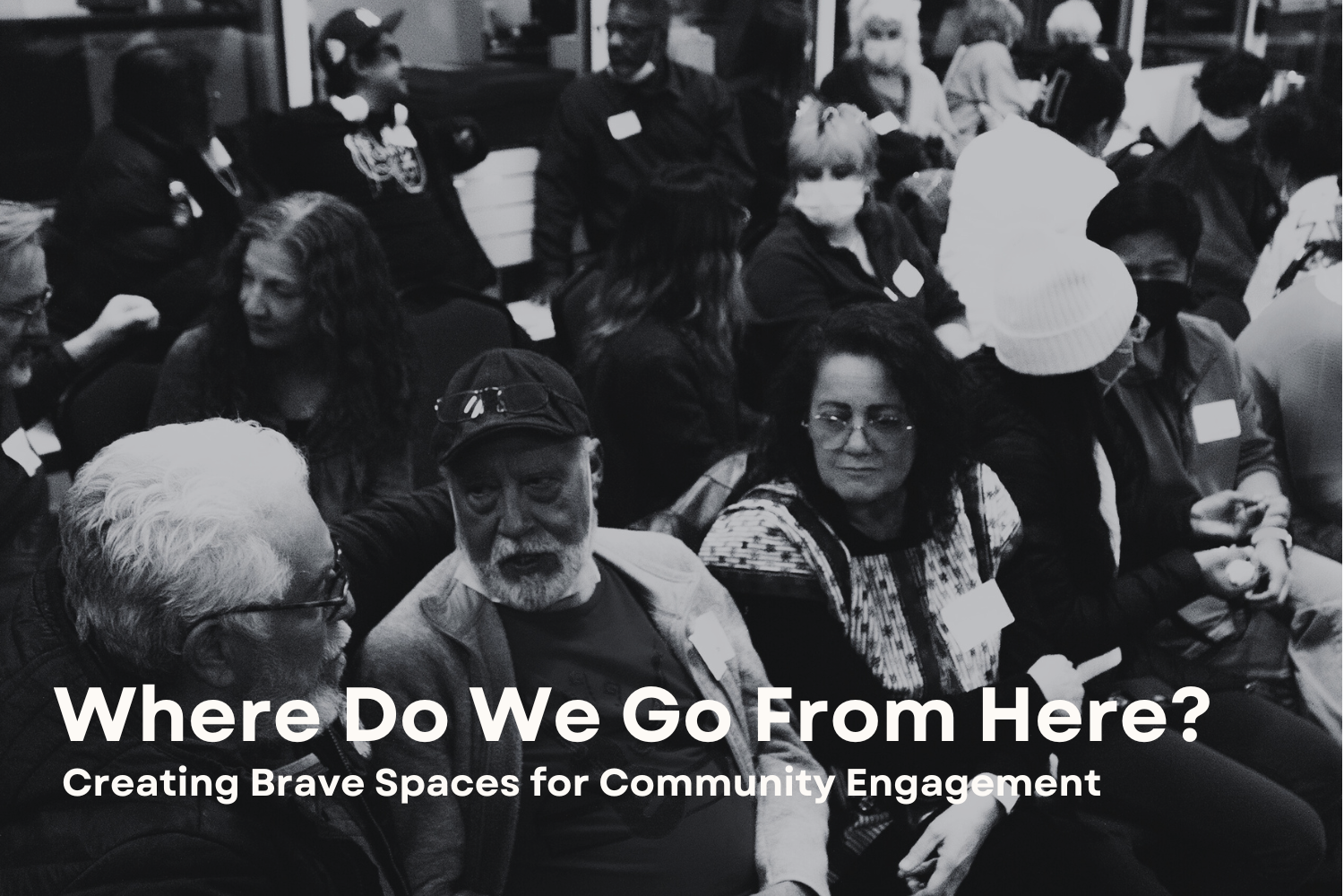
Where Do We Go From Here? Creating Brave Spaces for Community Engagement
“If oppressed persons can be defined as those who have nowhere to tell their story, our mission has been to provide space for anyone and everyone to be heard.”
- Jonathan Fox, Co-founder of Playback Theatre
Our stories are powerful. Our stories have the power to change someone’s life, connect neighbors across differences, tear down walls, and create whole new worlds.
Our stories are so powerful that they pose a threat to those who want to maintain control. They tell us that our stories don’t matter. That our stories aren’t real. That our stories should be silenced, detained, mocked, caged, erased.
Each day, we scroll and grieve as we watch the monuments, organizations, and policies that have made spaces for our stories being systematically torn down.
Where do we go from here? We create more spaces.
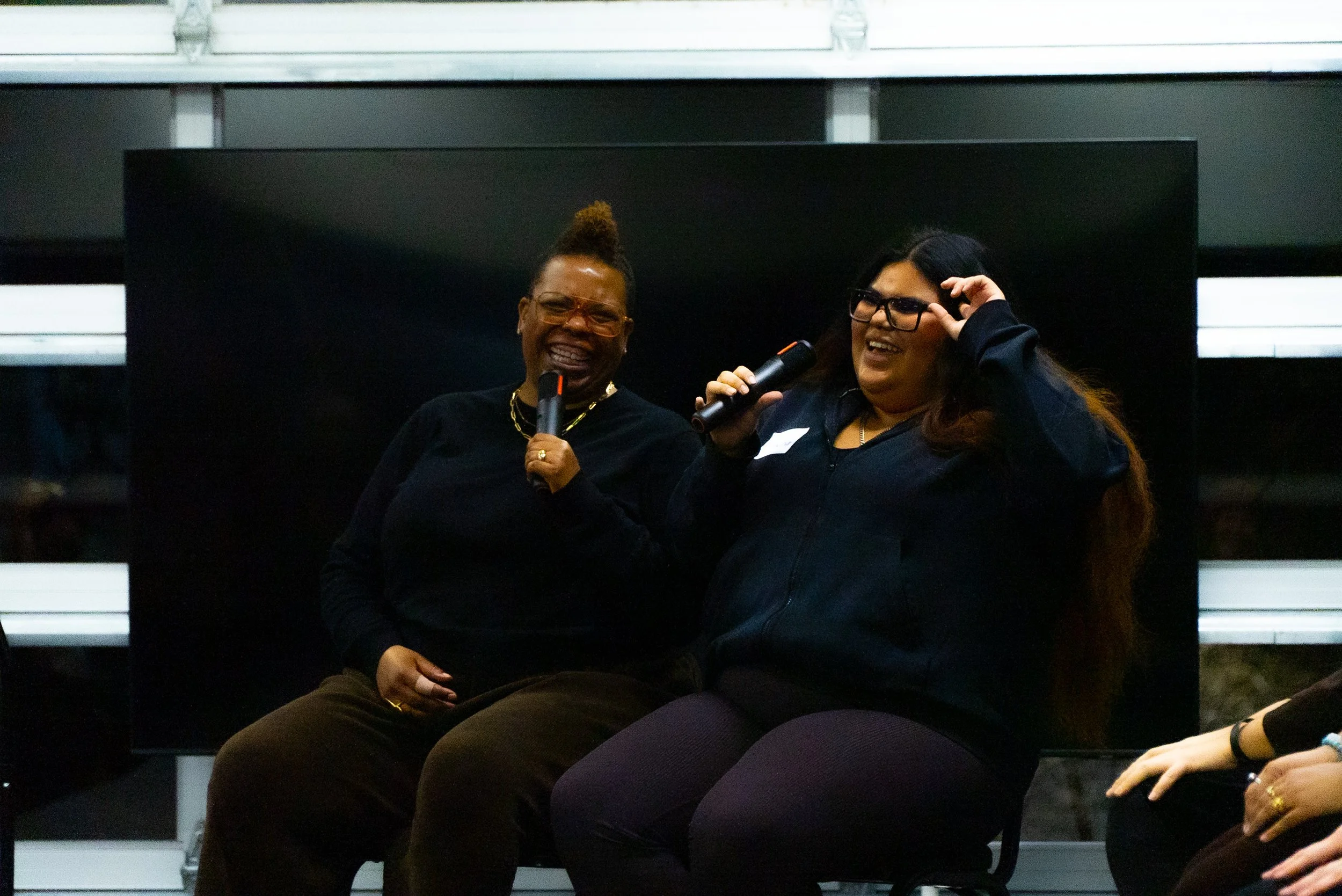
At High Desert Playback, we are a multiracial, queer, and trans-centered company of artists that creates brave spaces for community engagement. We’re in the practice of asking ourselves:
Whose stories most need to be heard right now?
How do we create spaces where they can speak their truths without code-switching, hiding, shrinking, or fear of retaliation?
Who do we need to partner with so that these stories shape the decisions, funding, policy, and care needed to bring about the radical social change needed in this moment?
From Safe Spaces to Brave Spaces: Why This Shift Matters Now
When I first started as a facilitator working with nonprofits and civic institutions almost 25 years ago, my goal was to create “safe spaces” for folks to feel comfortable listening to and sharing with others they may not know or agree with. Safety certainly matters. But it’s not enough.
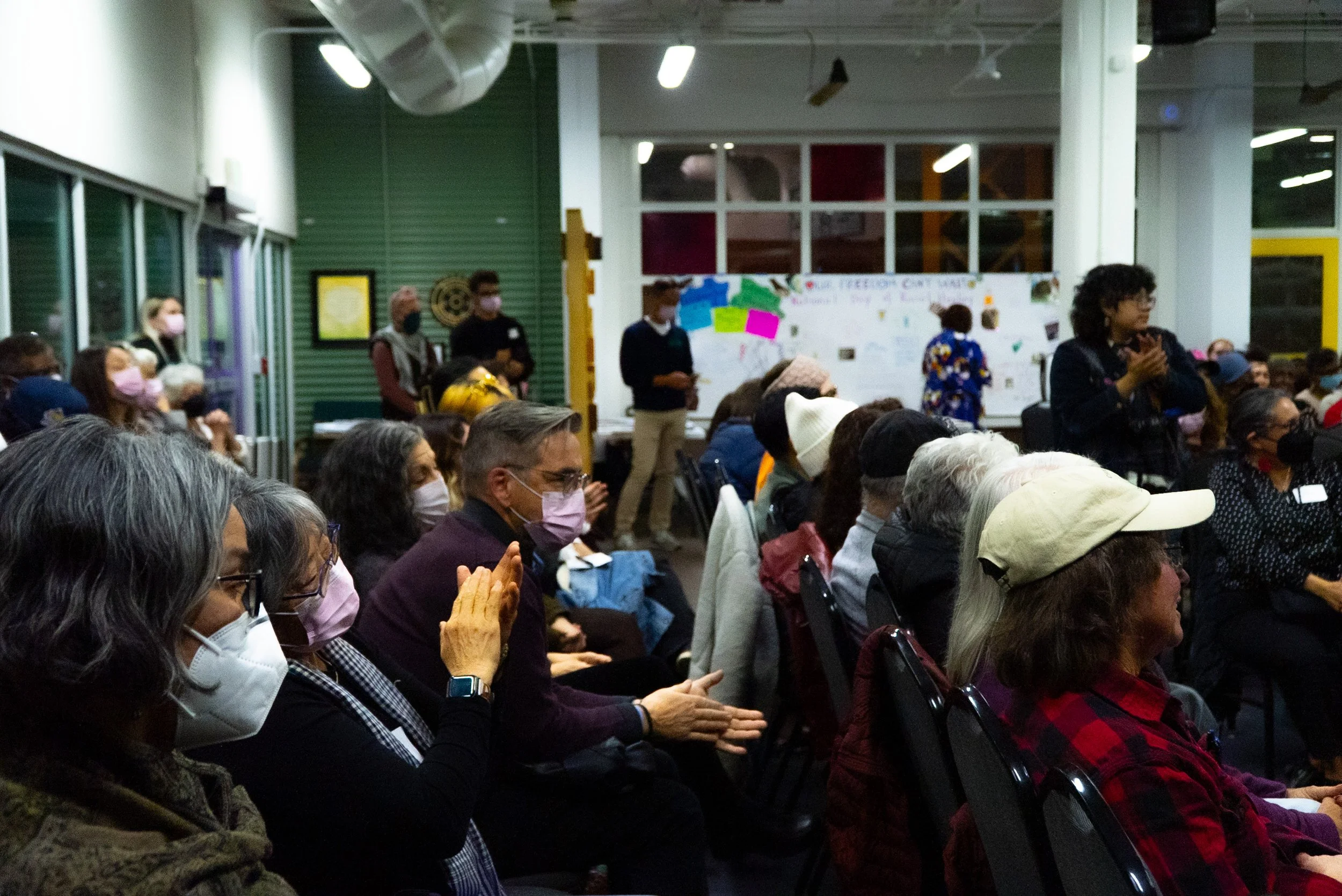
“Brave spaces” do not promise comfort. In fact, they invite discomfort as a catalyst for learning and growth. Brave spaces are where folks can:
Allow multiple truths to coexist at once
Stumble through hard conversations without being cancelled
Practice deep listening without the need to comment, fix, or explain away anyone else’s experience
How We Build Brave Spaces: The Playback Theatre Method
Creating brave spaces isn't magic, it's intentional practice.
Our practice—Playback Theatre—is how we bring these brave spaces to life.
Playback Theatre is an interactive form where we listen deeply to folks’ stories and then re-enact those stories, on the spot. Playback Theatre as part of community engagement efforts allows us to create brave spaces for:
Deep listening as a practice. Our ensemble listens to stories with our whole bodies, our imaginations, our hearts. Your story doesn't negate mine, and mine doesn't diminish yours. Folks feeling heard is the key metric.
Modeling vulnerability. We share our own stories too. The big and small moments of our lives. We show that all stories are welcomed and valued in the space.
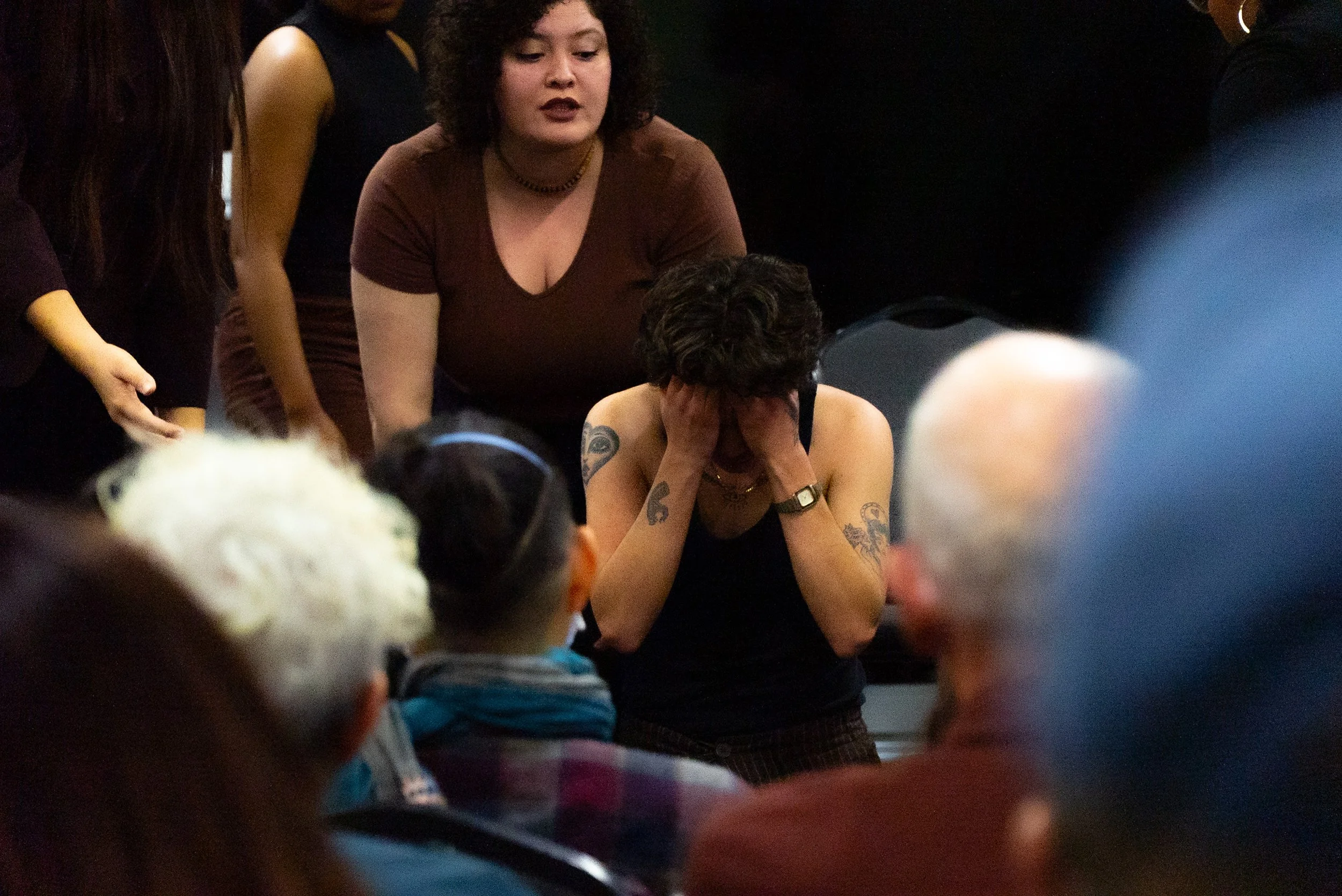
Inviting underheard voices. We make space for some folks to step up and others to step back. We ask, "Who hasn't shared yet? Whose perspective are we missing?"
Celebrating, not just tolerating, difference. We don't just welcome a diversity of stories, we celebrate them. We center those from historically marginalized groups. We make it clear that this space was built for you, not in spite of you.
Accountability without shame. When harm happens (and it will, we're all human), we address it directly. We name it, we repair it, and we learn from it, together.
Where Brave Spaces Are Needed Most (and Why)
So where are these brave spaces actually happening and where do they need to be happening? Where does community engagement theater like ours fit into the bigger picture of social change?
Nonprofits and Community Organizations
Many nonprofits understand the power of storytelling. It is how folks process trauma, share impact, build solidarity, and imagine futures beyond survival.
Playback Theatre helps non-profit organizations of all kinds implement authentic community engagement efforts in a way that actually builds trust. It creates spaces for folks who are often spoken about to get to speak for themselves—to be witnessed by their peers, colleagues, funders, and partners.
Local Government and Civic Institutions
City councils, planning commissions, public hearings—municipal leaders all over the country struggle with "the same ten people" who show up. This consistent group of engaged neighbors tend to be highly educated, affluent, or long-term residents. This means that so many other voices are left out of the decisions and initiatives that will have a huge impact on marginalized communities.
How do folks from marginalized communities get heard by civic institutions in ways that matter?
We have found in our civic engagement work that Playback Theatre has the power to:
Attract a diversity of neighbors
Humanize policy conversations, and
Go beyond the complaints to find the real stories
Imagine a city planning public input forum where residents don't just give three-minute testimonies. Instead, they tell meaningful, vulnerable stories about their community and watch them come to life on stage, witnessed by everyone in the room including the decision-makers.
That’s brave civic space.
Hospitals and Healthcare Systems
Healthcare organizations are under real pressure right now to prove they're advancing health equity. That means data: patient experience surveys, community needs assessments, focus groups, feedback forms, discharge follow-ups, quality metrics, the whole thing. And yes, we need that information. We can’t fix what we can’t see.
But here’s the tension: the way healthcare systems often collect “community input” can feel clinical, rushed, and, if I’m honest, extractive. Folks are asked to share the most personal parts of their lives, pain, identity, access barriers, discrimination, grief, chronic illness, gender-affirming care journeys, only to watch it disappear into a report they’ll never read. No wonder trust is fragile.
Playback Theatre can help bridge that gap by turning data collection into human connection.
Instead of “Tell us your story so we can measure it,” we create a brave space that says: Tell us your story, and we will witness it—together. In a Playback process, stories don’t get flattened into bullet points. They get honored out loud, embodied onstage, and held by the room. That shift builds empathy fast, not as a buzzword, but as a lived experience.
For hospitals, clinics, and public health teams, this work can support:
Community listening sessions that feel relational (not transactional)
Patient and staff dialogue where hard truths can be shared without folks getting punished for being honest
Trust-building across differences, especially with communities that have every reason to be skeptical of institutions
Better “why” behind the numbers, so equity goals aren’t just tracked—they’re understood
Because when folks feel genuinely seen, they’re more likely to share what’s real. And when decision-makers feel the impact of those stories in their bodies, they’re more likely to act. That’s the magic: we don’t just gather information, we build relationship. And relationship is where health equity starts.
Workplaces and Professional Environments
I have facilitated hundreds of sessions over the years focused on belonging and inclusion. Unfortunately, I have seen more workplace culture initiatives fail than succeed.
Why? The work is too often treated like a series of boxes that need to be checked instead of a team of humans who need to be heard.
Playback Theatre makes space for real conversations. It contributes to a human-first culture by creating structured opportunities for employees to share experiences of exclusion, bias, allyship, and access. It breaks down walls and leads to genuine and meaningful engagement.
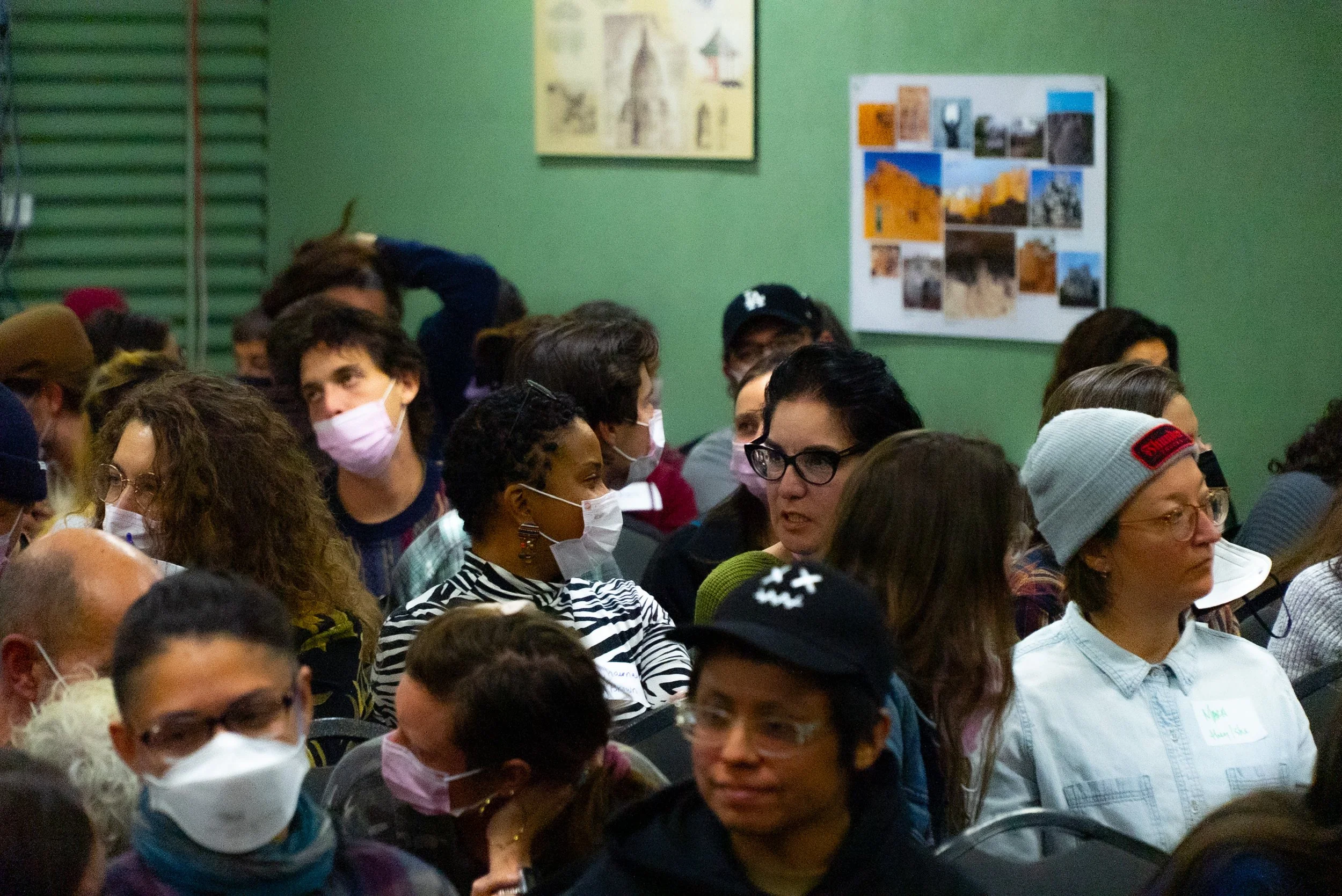
So, Where Do We Go From Here?
Social change requires policy, funding, and accountability. If, like Jonathan Fox says, oppression is “having nowhere to tell your story”, then social change also requires brave spaces for folks to tell their stories.
As our federal government works to dismantle these spaces, we need to:
Defend, liberate, and design physical and virtual spaces where folks can gather, share, be witnessed, and walk away feeling a little more whole
Listen to communities, where they are, and ask how to serve without extracting or trying to control the narrative
Use our influence and resources to give these stories space and time to shape the policies that will lead to real social change
We invite you to partner with us to create spaces for anyone and everyone to be heard.
That's where we go from here.
Want to experience the work of High Desert Playback firsthand? Check out our upcoming events or book a Discovery Call to explore how we might create these spaces together. Because your community's stories deserve to be heard.
Photo Credit: Noor-un-nisa Touchon, noorunnisa.com